[DK Goel] Q. 85,86,87,88 Accounting Ratios Solutions Class 12 CBSE (2026-27)

the solutions of Question number 85, 86, 87, 88 of Accounting Ratios chapter 5 of DK Goel Class 12 CBSE (2026-27)

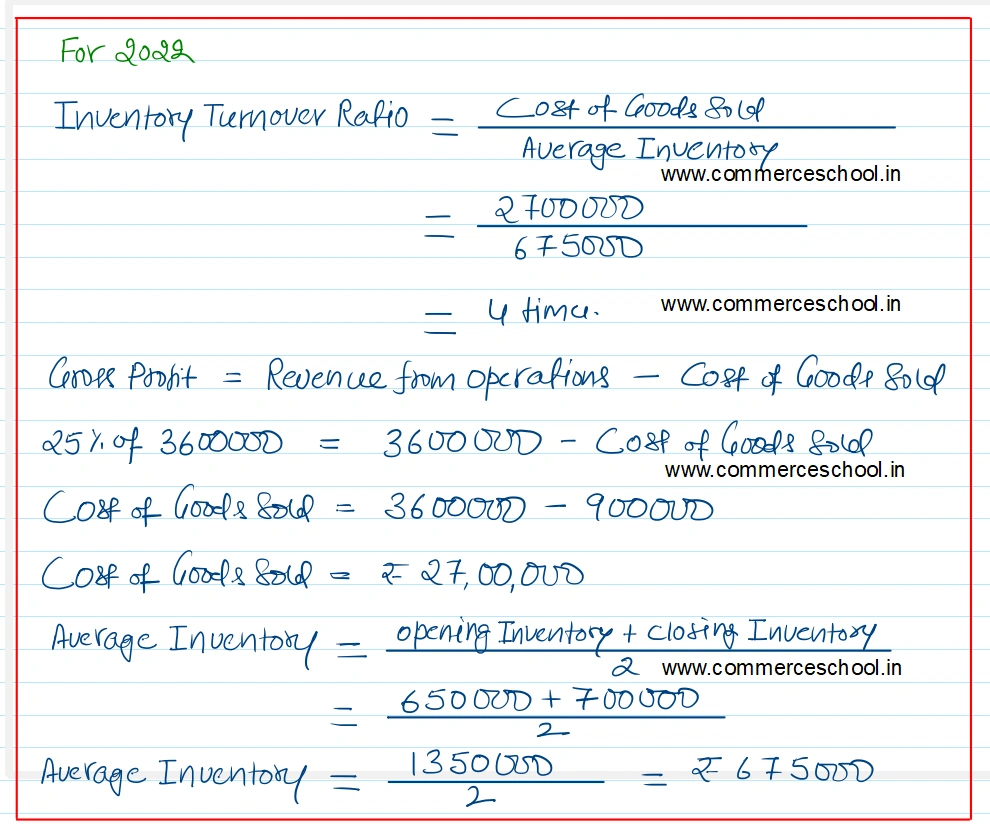
Q. 85. Following figures have been obtained from the books of Pawan Roadways Ltd:-
| 2022 ₹ | 2023 ₹ | |
| Revenue from Operations (Sales) (at Gross Profit of 25%) | 36,00,000 | 60,00,000 |
| Trade Receivables on 1st January | 5,40,000 | |
| Trade Receivables on 31st December | 6,60,000 | 9,40,000 |
| Inventory on 1st January | 6,50,000 | |
| Inventory on 31st December | 7,00,000 | 10,00,000 |
Calculate the Trade Receivables Turnover Ratio. Also Calculate Inventory Turnover Ratio. Give necessary Comments.

[Ans. 2022: Trade Receivables Turnover Ratio 6 times; 2023 : Trade Receivables Turnover Ratio 7. 5 times;
Inventory Turnover Ratio in 2022 4 Times: in 2023 5.28 Times.]
Solution:-
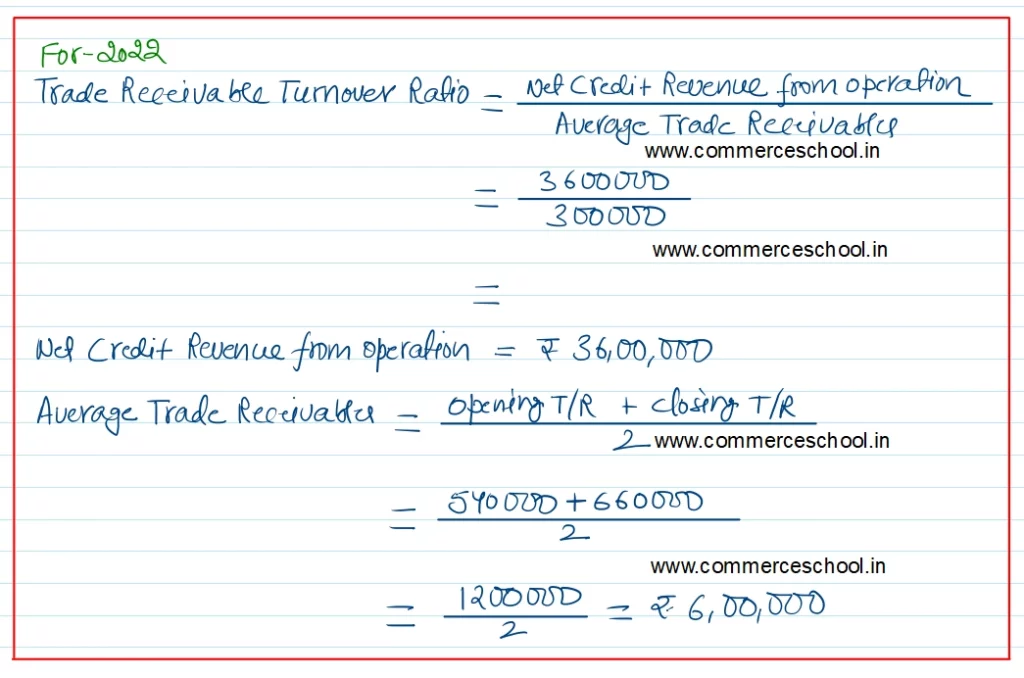
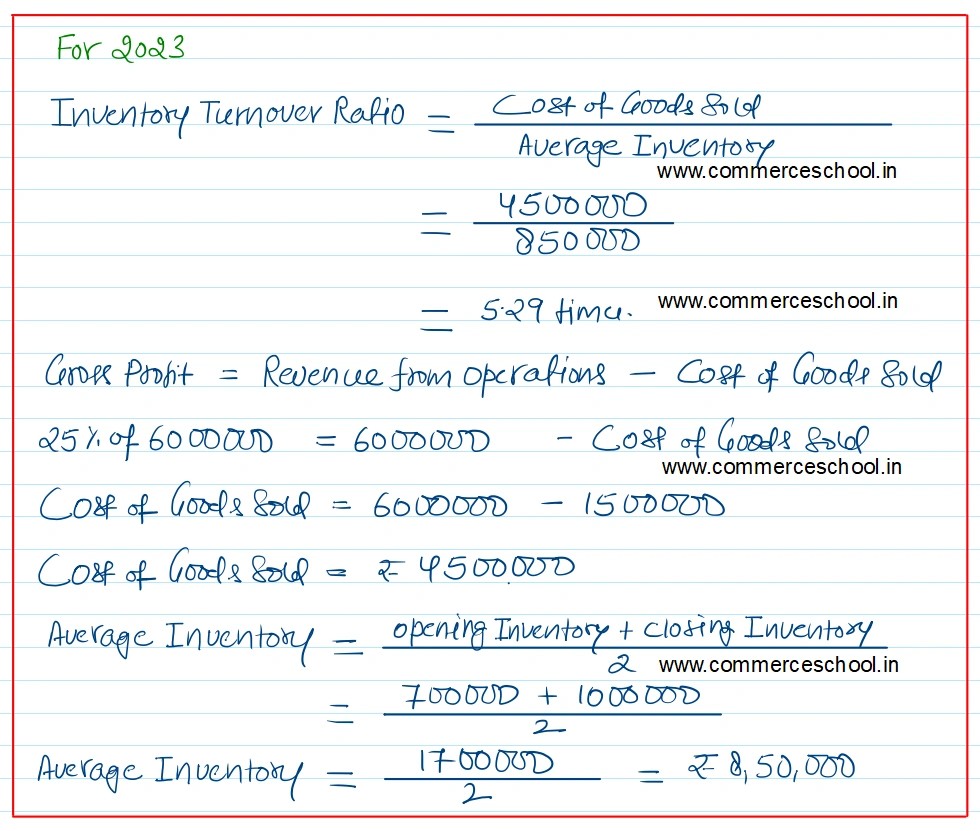
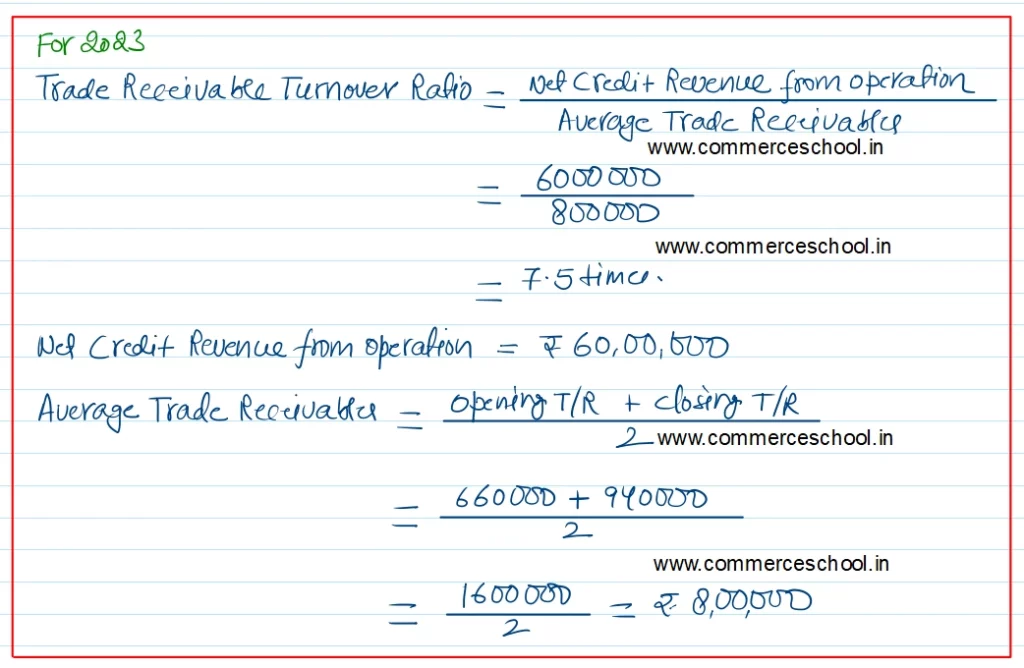
Comments:- (1) in 2023, Trade Receivables Turnover Ratio has increased from 6 times t0 7.5 times. It indicates that amount from Trade Receivables is being collected more quickly.
(2) In 2023, Inventory Turnover Ratio has also increased. It indicates that inventory is being rotated into revenue from operations more quickly. As such, the sales policy of the management is quite efficient.
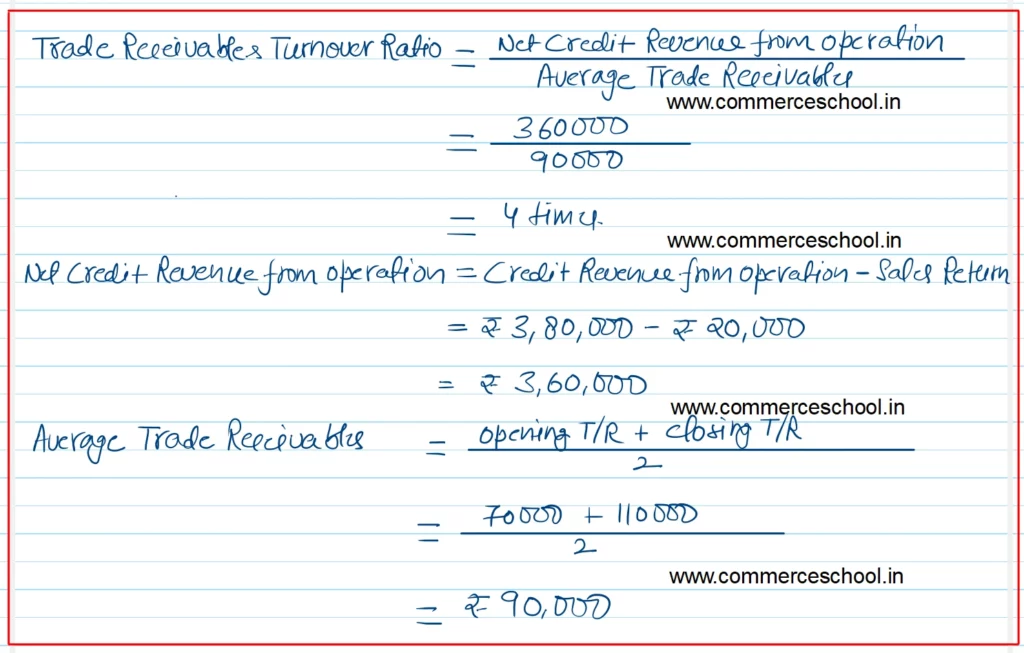
Q. 86. Calculate trade receivables turnover ratio from the following:
| ₹ | |
| Credit Revenue from Operations (Credit Sales) | 3,80,000 |
| Revenue from Operations Returns (Sales Returns) | 20,000 |
| Trade Receivables on 1.04.2022 | 70,000 |
| Trade Receivables on 31.03.2023 ₹ 1,10,000 Less: Provision for Doubtful Debts ₹ 10,000 | 1,00,000 |
State Giving reason, what will be effect of the following on Trade Receivables Turnover Ratio:
(i) Received ₹ 20,000 from a customer.
(ii) Sale of goods on credit ₹ 30,000.
(iii) Cash Revenue from Operations ₹ 40,000.
[Ans. Trade Receivables Turnover Ratio 4 times. Effect on Trade Receivables Turnover Ratio: (i) Increase (ii) Decrease (iii) Not alter.
Hint: Provision for Doubtful debts are ignored while calculating Trade Receivables Turnover Ratio.
Solution:-
(i) Received ₹ 20,000 from a customer:
It will reduce the Closing Debtors reducing the Average Debtors, further it will reduce the denominator and nominator remain intact. the Trade receivable turnover ratio will increase
T/R Turnover Ratio = Net Credit Revenue from Operations/Average Debtors
Average T/R = 70,000 + 90,000 = 1,60,000/2 = ₹ 80,000
T/R Turnover Ratio = 3,60,000/80,000 = 4.5 times.
(ii) Sale of goods on credit ₹ 30,000:-
It will increase the net credit revenue from opeations and would also increase closing Trade Receivables. It will reduce the overall Trade Receivable Turnover Ratio as follows:
Net Credit Revenue from Operations = ₹ 3,60,000 + ₹ 30,000 = ₹ 3,90,000
Closing Trade Receivables = ₹ 1,10,000 + ₹ 30,000 = ₹ 1,40,000
Average Trade Receivables = ₹ 70,000 + ₹ 1,40,000 = ₹ 2,10,000/2 = ₹ 1,05,000
Trade Receivables Turnover Ratio = 3,90,000/1,05,000 = 3.71 times.
(iii) Cash Revenue from Operations ₹ 40,000
It will not imact either net credit revenue from operations or average trade receivables. It will not alter the Trade Receivable turnvoer ratio.
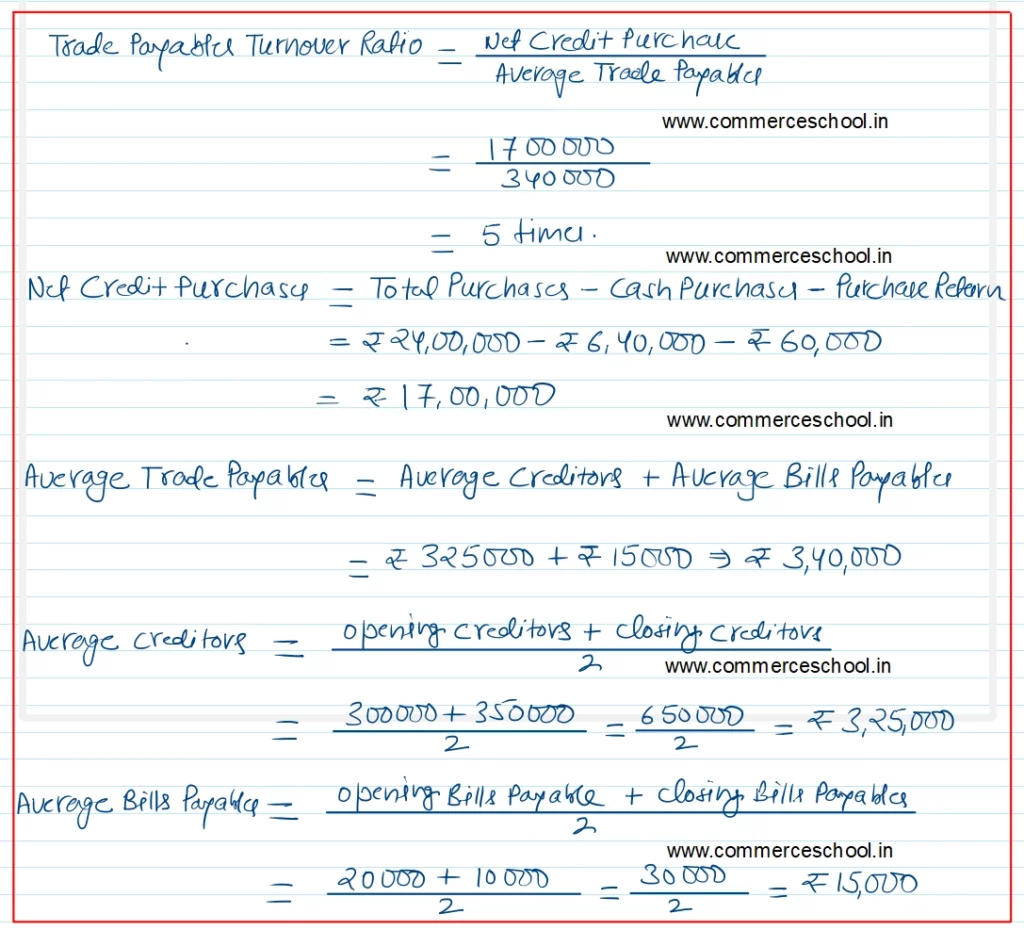
Q. 87. Calculate Trade Payables Turnover Ratio from the following:-
| ₹ | |
| Total Purchases | 24,00,000 |
| Cash Purchases | 6,40,000 |
| Purchases Returns (out of Credit purchases) | 60,000 |
| Opening Balance of Creditors | 3,00,000 |
| Opening Balance of Bills Payables | 20,000 |
| Closing Balance of Creditors | 3,50,000 |
| Closing Balance of Bills Payables | 10,000 |
[Ans. Trade Payables turnover Ratio 5 times.]
Solution:-
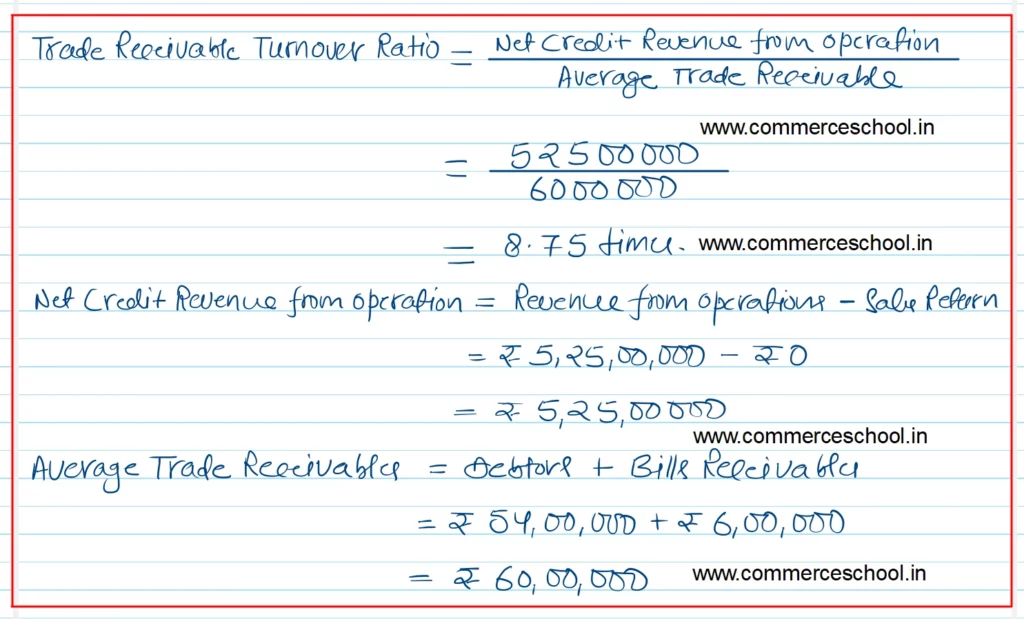
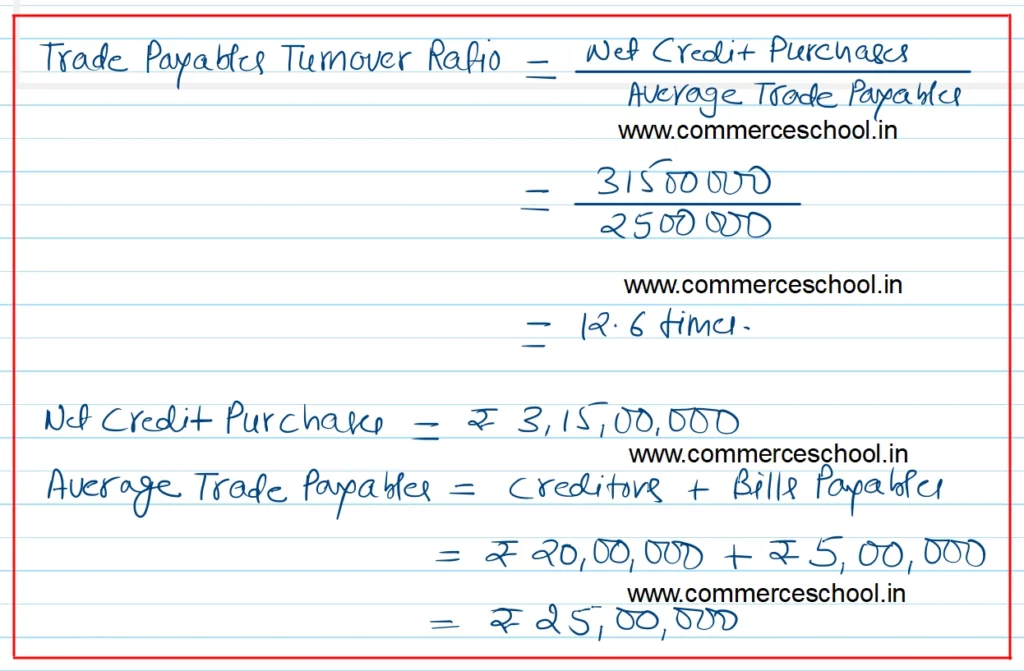
Q. 88. On the basis of the following information calculate (i) Trade Receivables Turnover Ratio; and (ii) Trade Payables Turnover Ratio.
| ₹ | |
| Debtors | 54,00,000 |
| Creditors | 20,00,000 |
| Revenue from Operations (Sales) | 5,25,00,000 |
| Bills Payable | 5,00,000 |
| Bills Receivables | 6,00,000 |
| Purchases | 3,15,00,000 |
[Ans. (i) 8.75 times; (ii) 12.6 times.]
Solution:-