[CBSE] Q. 106,107,108,109 Solution of Accounting Ratios TS Grewal Class 12 (2026-27)

Solution of Question 106, 107, 108, 109 Accounting Ratios of TS Grewal Book 2026-27 session CBSE Board

Q. 106. From the following information, calculate opening Trade Receivables and Closing Trade Receivables:
Trade Receivables Turnover Ratio – 4 Times

Closing Trade Receivables were ₹ 20,000 more than that in the beginning.
Cost of Revenue from Operations – ₹ 6,40,000.
Cash Revenue from Operations – 1/3rd of Credit Revenue from Operations.
Gross Profit Ratio – 20%.
[Ans.: Opening Trade Receivables = ₹ 1,40,000; Closing Trade Receivables = ₹ 1,60,000.]
Solution:
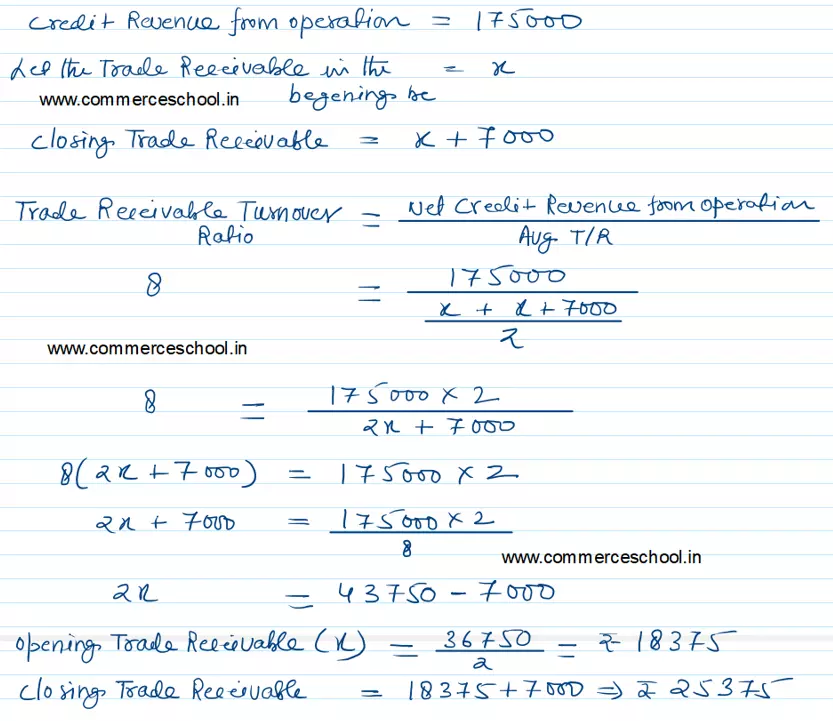
Q. 107. ₹ 1,75,000 is the Credit Revenue from Operations, i.e., Net Credit Sales of an enterprise.
If Trade Receivables Turnover Ratio is 8 times, calculate Trade Receivables in the beginning and at the end of the year. Trade Receivables at the end is ₹ 7,000 more than that in the beginning.
[Ans.: Trade Receivables in the beginning = ₹ 18,375; Trade Receivables at the end = ₹ 25,375.]
Solution:-
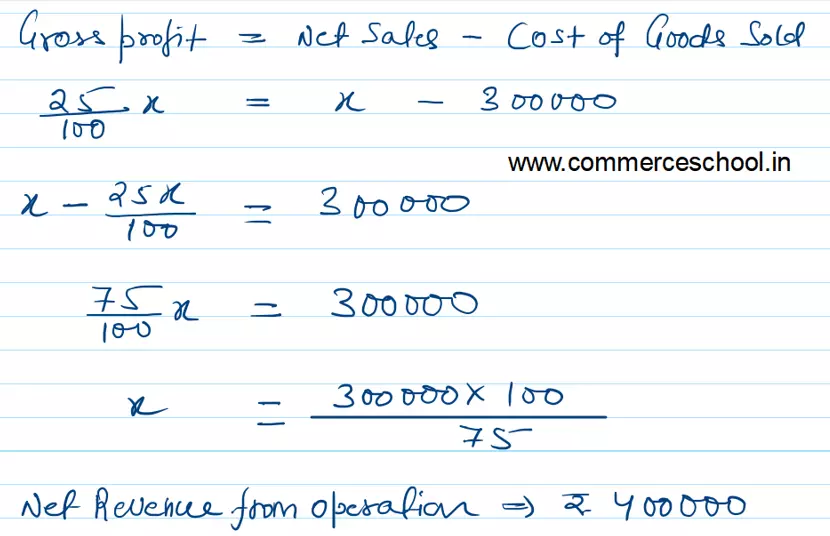
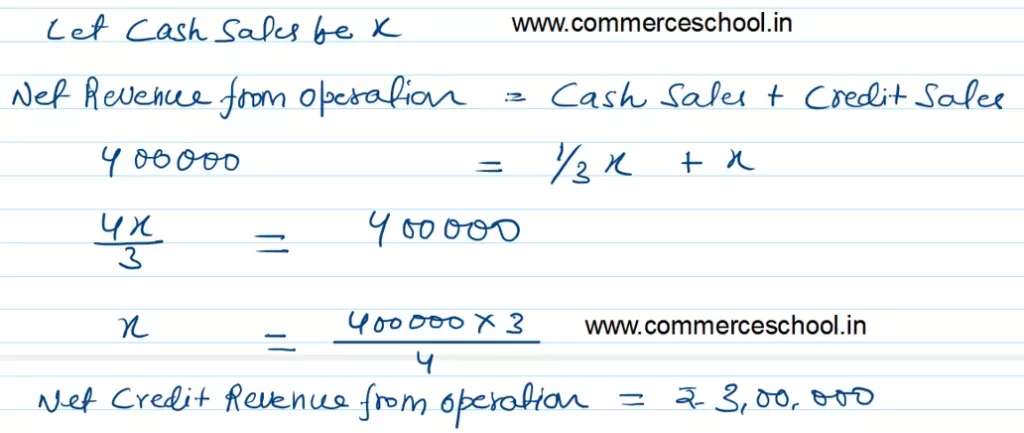
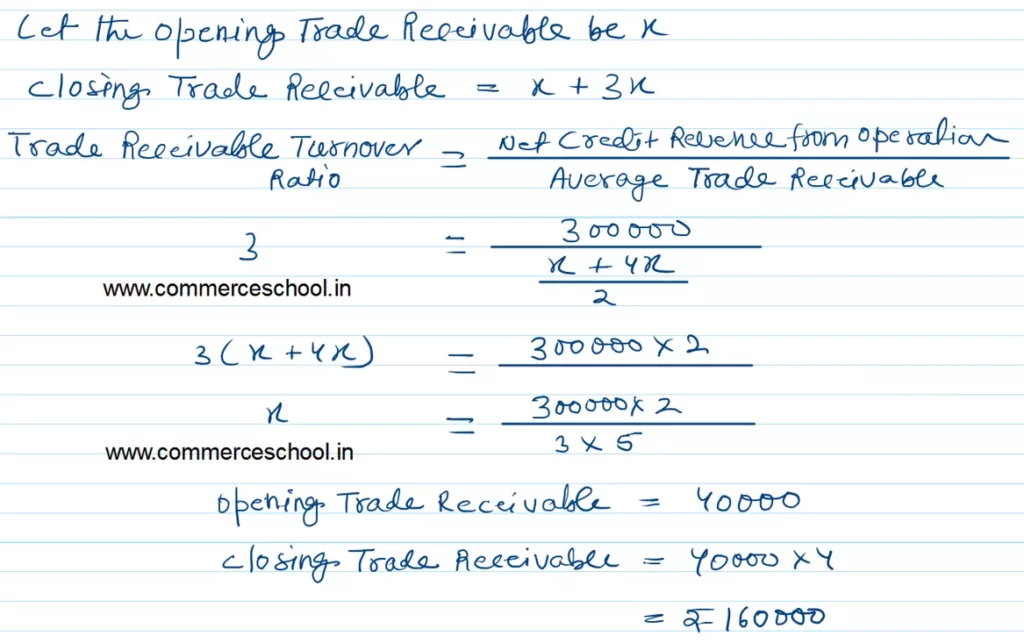
Q. 108. From the following information, calculate Opening and Closing Trade Receivables if Trade Receivables Turnover Ratio is 3 Times:
(i) Cash Revenue from Operations is 1/3rd of Credit Revenue from Operations.
(ii) Cost of Revenue from Operations is ₹ 3,00,000.
(iii) Gross Profit is 25% of the Revenue from Operations.
(iv) Trade Receivables at the end are 3 Time more than that of in the beginning.
[Ans.: Opening Trade Receivables = ₹ 40,000; Closing Trade Receivables = ₹ 1,60,000.]
Solution:-
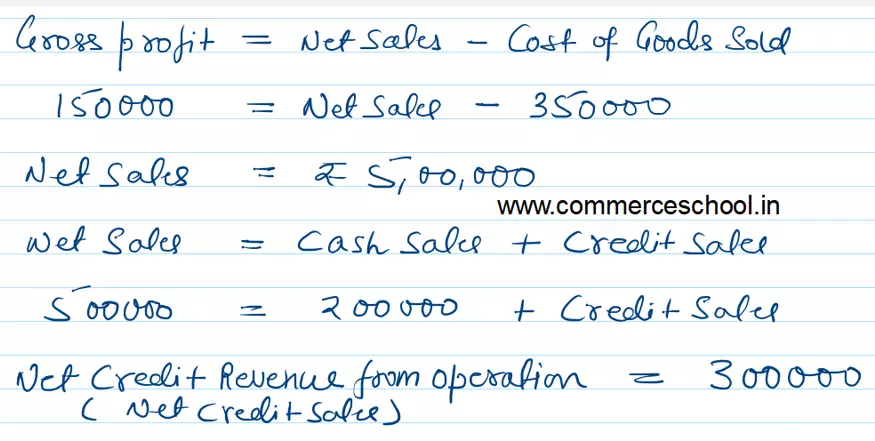
Q. 109. Cash Revenue from Operations (Cash Sales) ₹ 2,00,000, Cost of Revenue from Operations or Cost of Goods Sold ₹ 3,50,000;
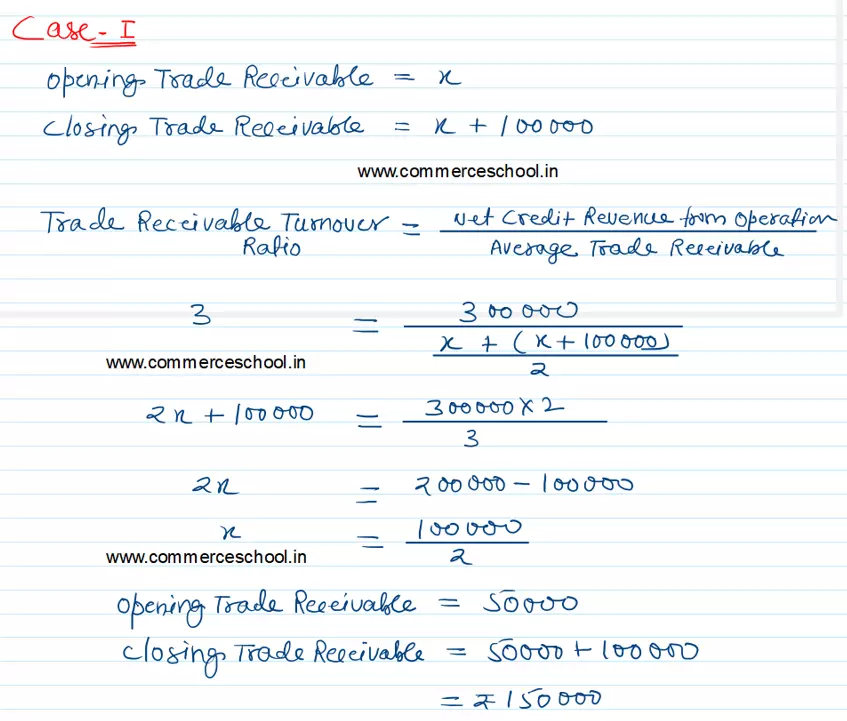
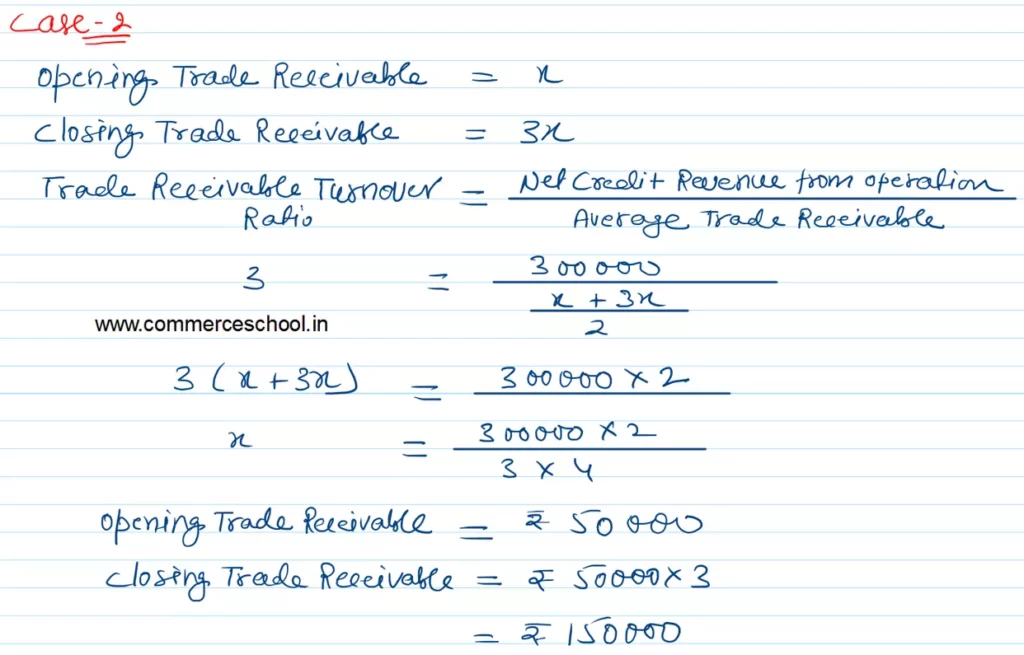
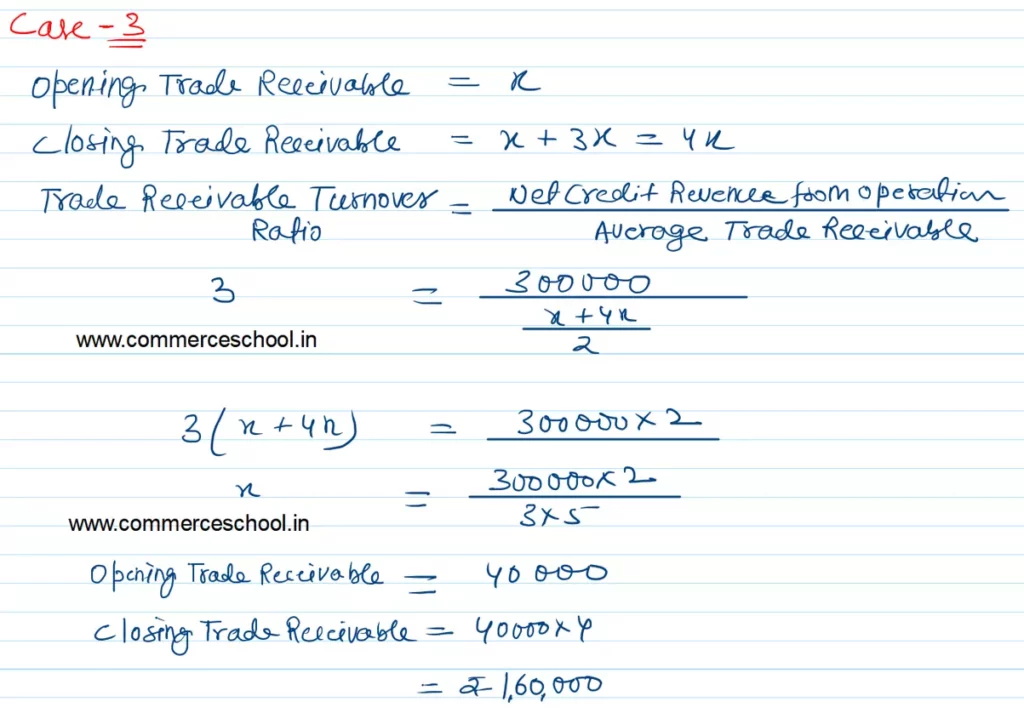
Gross Profit ₹ 1,50,000; Trade Receivables Turnover Ratio 3 Times: Calculate Opening and Closing Trade Receivables in each of the following alternative cases:
Case 1: If Closing Trade Receivables were ₹ 1,00,000 in excess of Opening Trade Receivables.
Case 2: If Trade Receivables at the end were 3 times than in the beginning.
Case 3: If Trade Receivables at the end were 3 times more than that of in the beginning.
Solution:-