[DK Goel] Q. 181,182,183,184 Accounting Ratios Solutions Class 12 CBSE (2026-27)

the solutions of Question number 181, 182, 183, 184 of Accounting Ratios chapter 5 of DK Goel Class 12 CBSE (2026-27)

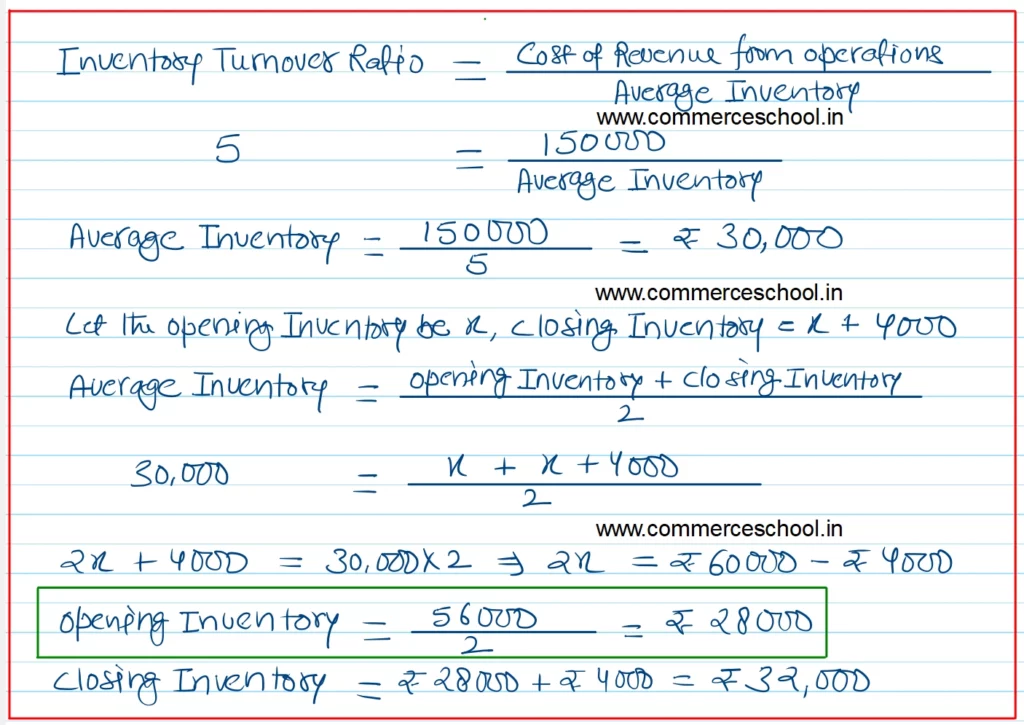
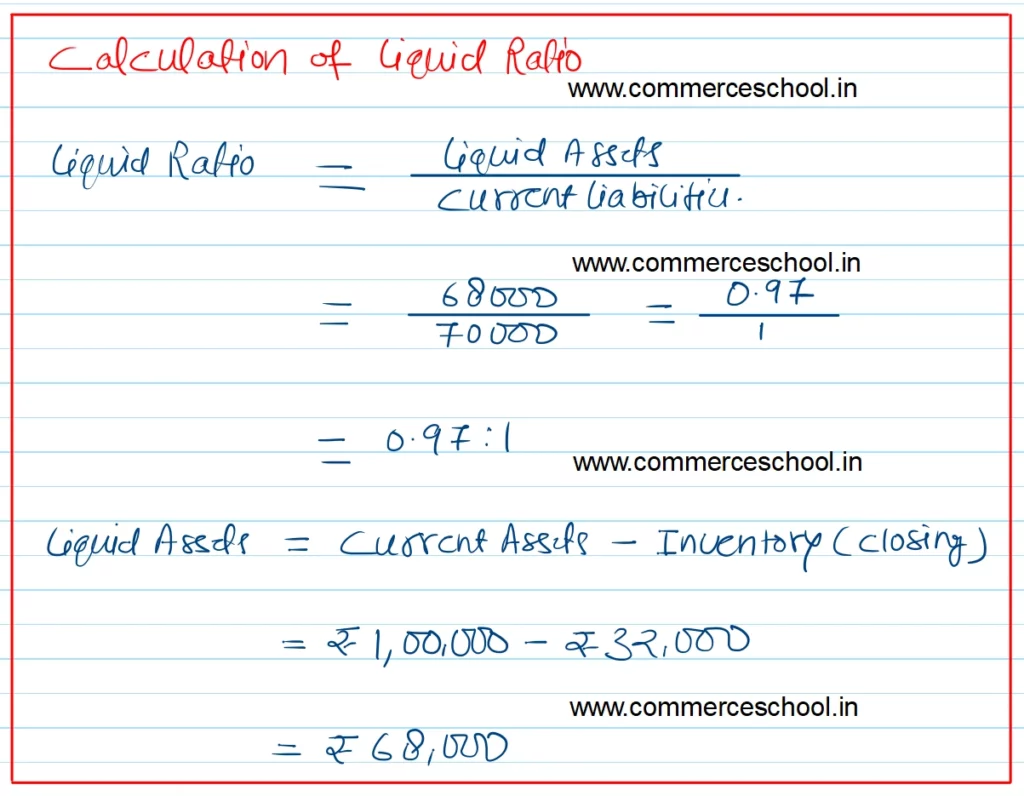
Q. 181. Following are the details available:-
If the closing inventory is more by ₹ 40,000 than opening inventory, determine the following:-
| ₹ | |
| Current Assets | 1,00,000 |
| Current Liabilities | 70,000 |
| Total Revenue from Operations | 2,00,000 |
| Cost of Revenue from Operations | 1,50,000 |
| Operating Expenses | 20,000 |
| Inventory turnover | 5 times |

(i) Opening Inventory, (ii) Liquid Ratio.
[Ans. (I) Opening Inventory ₹ 28,000; (ii) Liquid Ratio .97 : 1.]
Solution:-
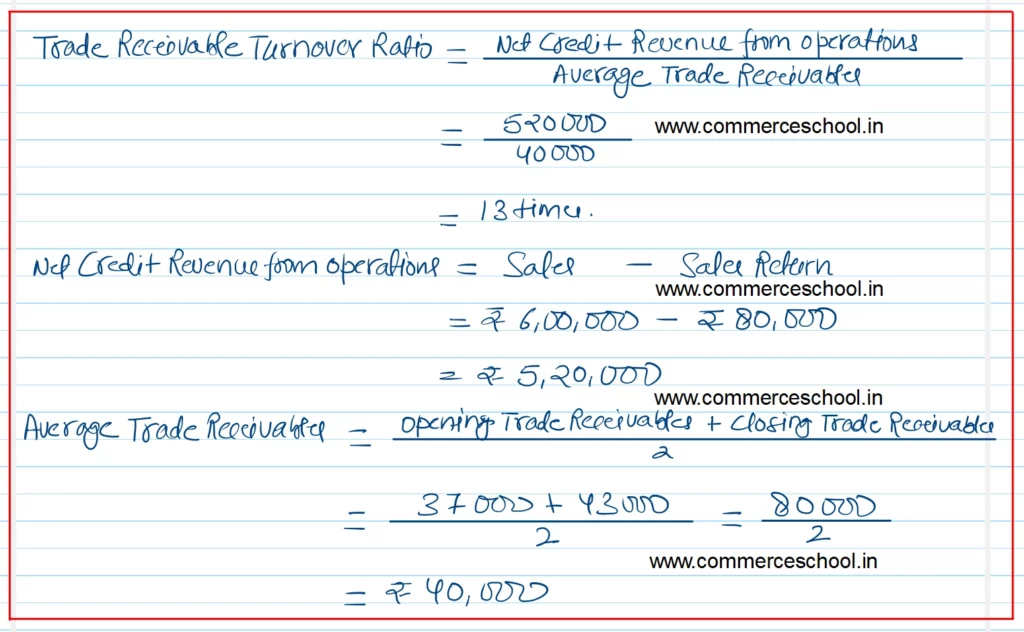
Q. 182. From the following information, calculate Trade Receivables Turnover Ratio:-
| ₹ | |
| Opening Trade Receivables | 37,000 |
| Closing Trade Receivables | 43,000 |
| Revenue from Operations (Sales) | 6,00,000 |
| Cash Revenue from Operations (Cash Sales) | 80,000 |
[Ans. Trade Receivables Turnover Ratio 13 Times.]
Solution:-
Q. 183. From the following information, calculate trade receivables turnover ratio:
| ₹ | |
| Credit Sales | 14,80,000 |
| Sales Returns | 20,000 |
| Debtors | 2,50,000 |
| Bills Receivables | 42,000 |
| Provision for Doubtful Debts | 1,500 |
[Ans. Trade Receivables turnover Ratio 5 times.]
Solution:-
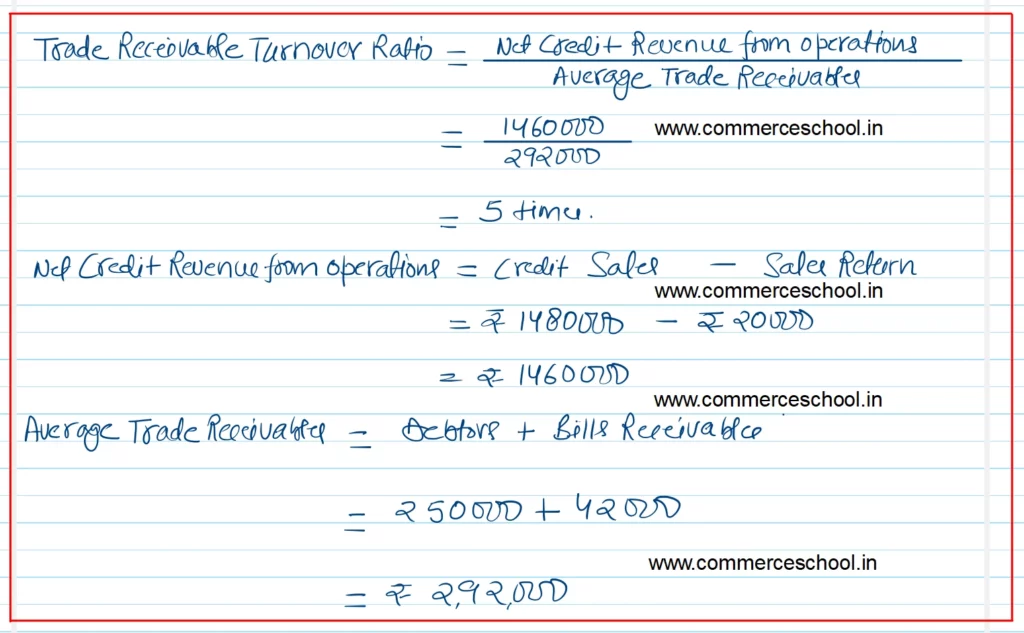
Hint:- Provision for Doubtful Debts is not deducted from Trade Receivables for the calculation of this ratio.
Q. 184. Calculate Trade Receivables turnover ratio from the following:-
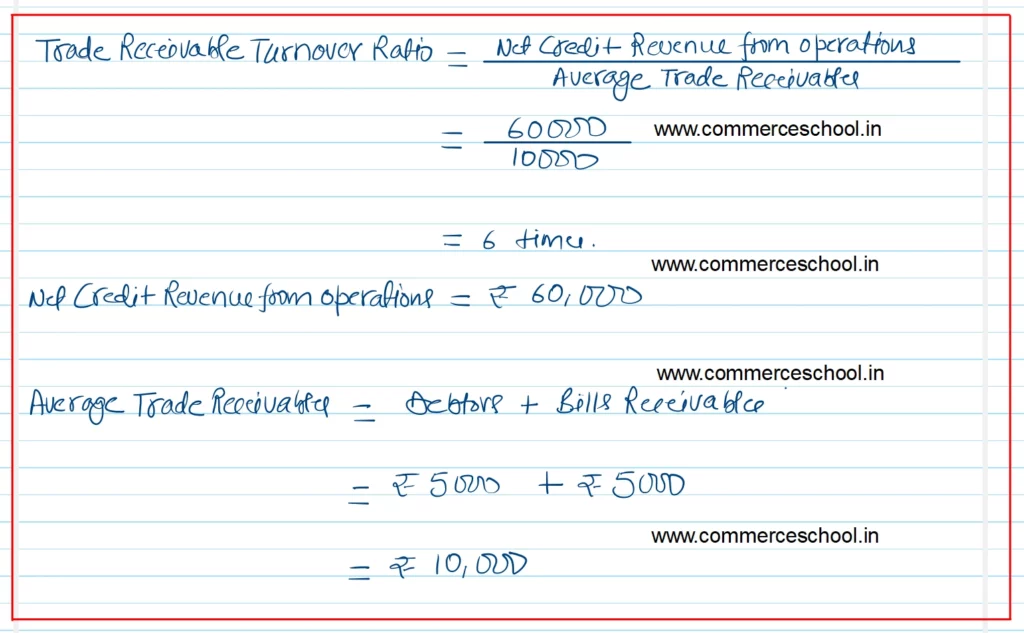
Credit Revenue from Operations for the year ₹ 60,000, Debtors ₹ 5,000, Bill receivable ₹ 5,000.
[Ans. 6 times.]
Solution:-